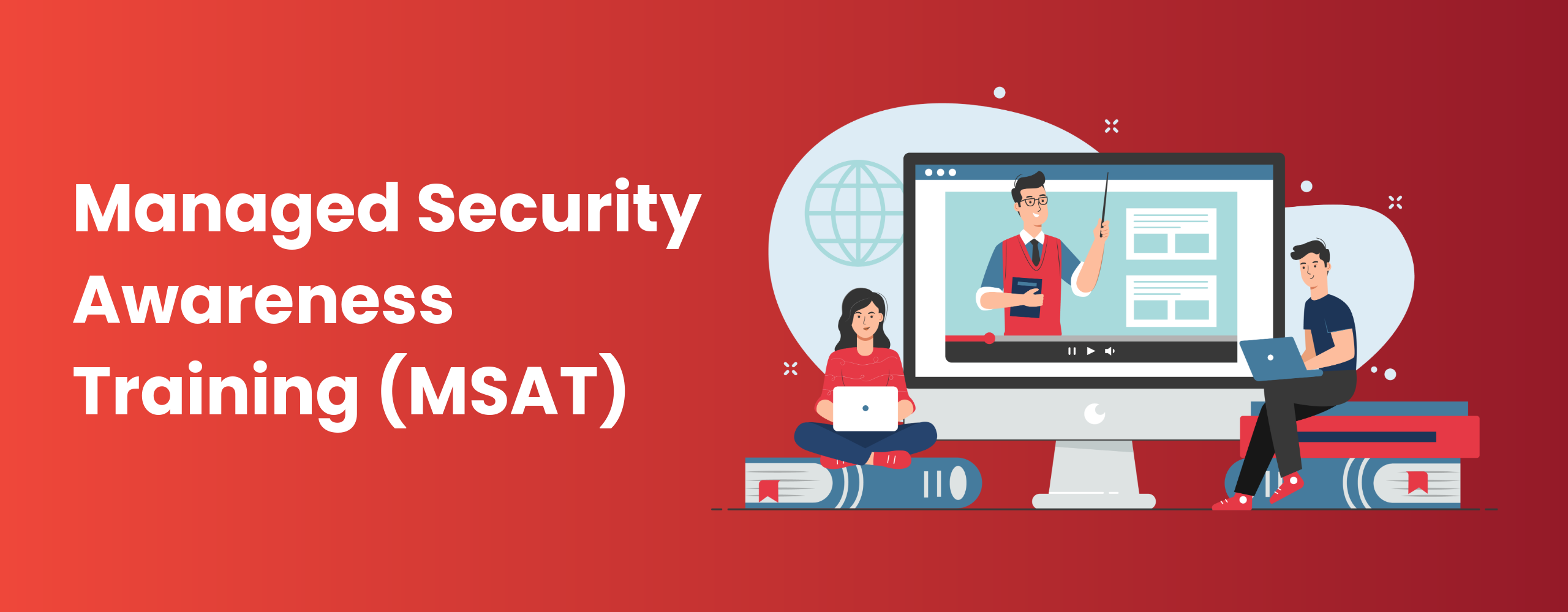
Managed Security Awareness Training (MSAT) is a cybersecurity program that teaches employees how to recognize and avoid cyber threats. It combines ongoing training with real-world phishing simulations so your team learns how attacks actually happen and how to stop them.
Since most cyber incidents start with human error, MSAT turns your employees into an active part of your security strategy, not a weak point.
How MSAT Works
MSAT provides continuous, bite-sized training paired with simulated attacks that mirror real threats your business faces.
Your team learns how to:
- Identify phishing and scam emails
- Spot suspicious links and attachments
- Recognize social engineering tactics
- Report threats quickly
- Follow safe security practices
Behind the scenes, MSAT tracks performance and risk trends so you can see where additional training is needed.
Why MSAT Matters for Businesses
Firewalls and security tools cannot stop every threat. Many attacks succeed because someone clicks, downloads, or shares information without realizing the risk.
MSAT helps close this gap by:
- Reducing phishing success rates
- Lowering human error risk
- Improving incident prevention
- Supporting compliance requirements
What Makes MSAT Different from One-Time Training?
Traditional training is often forgotten. MSAT is ongoing and adapts as threats evolve.
Instead of a single annual session, MSAT delivers short, relevant lessons and realistic simulations that reinforce safe behavior throughout the year.
Is MSAT Right for Your Business?
If your team uses email, cloud apps, or shared systems, MSAT is essential. It works alongside tools like firewalls and SIEM to create a layered security approach.
At Netranom, MSAT is part of our managed cybersecurity services, helping businesses stay protected without overwhelming employees.
Learn more – Contact Us for IT Support & Services – Netranom

 Coal & Mining